
About
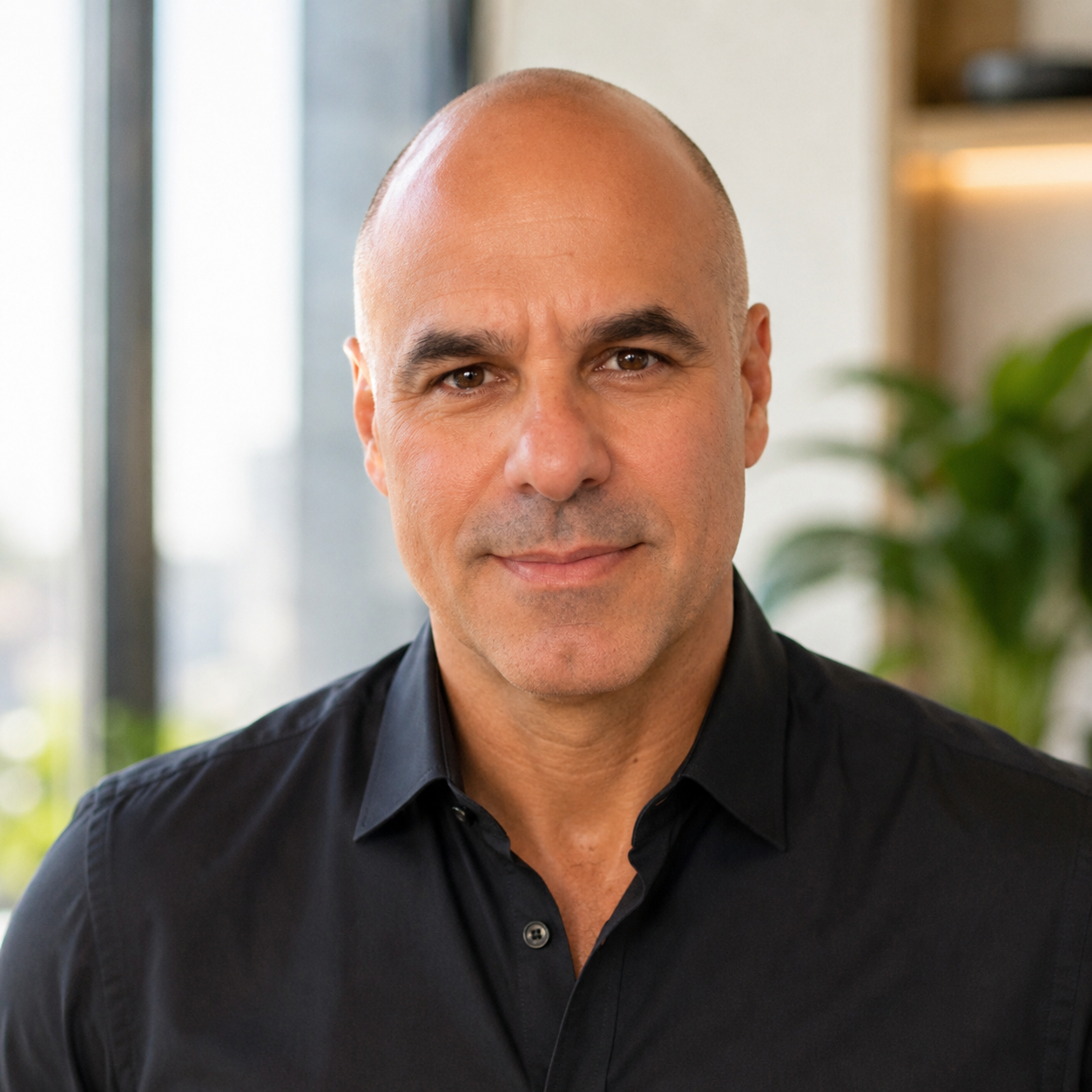
About Mario
I was born in Greece and grew up in the southern suburbs of Athens. When I think of home, I think of the light on the sea and the sight of the Acropolis above a busy, modern city. Greece is beautiful, but what I love most about it is that sense of depth. In Athens, you can look up in the middle of an ordinary day and see part of the history that shaped Western civilization.
My Greek roots and my life in America
Being Greek gave me a love of history and an appetite for questions. I take pride in coming from a place where people argued about democracy, justice, and what it means to live well, and where a good argument is still something of a national pastime. I’ve carried that with me. I enjoy a conversation with someone who sees things differently, especially when I leave it thinking a little differently myself.
I’ve lived in the United States for more than thirty years. Greece will always be my birthplace, and America is where I’ve built my career and made a home with my family. I’m grateful to this country for the opportunity to do both.
Family and fatherhood
Of my two parents, I take after my mother most. She’s no longer with me, but so much of her lives on in me. She gave me unconditional love. I never had to earn it, and I never doubted it. When I think about the way I love the people closest to me, I know exactly where it came from.
My father served as a Navy SEAL in the Greek Navy. I’ve always looked up to him for his strength of character and his philosophy of life. As a boy, I was just as impressed by what he could do underwater. He was a spectacular freediver. I never quite matched him, though I came close.
My wife, Anna, and I are both software developers. One of the pleasures of sharing a profession is that I can tell her why a problem has been on my mind all day and she understands what makes it interesting. She has her own way of looking at things, and I value her judgment. What I love most about Anna, though, is her good heart. She’s thoughtful and patient, and I can tell her what’s on my mind even when I haven’t quite found the words for it. That kindness has shaped the home we’ve built together. I’m thankful for the way we’ve supported each other and proud of what we’ve accomplished as partners.
Of everything I’m proud of in that life, I’m proudest of our son, Alexander. I love seeing what he accomplishes in school, listening to him play guitar and piano, and watching him grow in tennis and taekwondo. What makes me proudest is his character. He has a good heart, and I recognize some of Anna’s kindness in him. Being his father has given me a deeper appreciation for my own parents and plenty still to learn. Sometimes he needs my advice. Sometimes he needs me to trust him to find his own way. Whichever it is, I want him to feel as sure of my love as I always felt of my mother’s.
My uncle Taso, my father’s brother, has been there for the most important moments of my life. Some of what I treasure most, though, is the time we spent simply talking. History, philosophy, politics, science, we talked about all of it. Those conversations sparked my interest in scientific inquiry. I learned to follow an argument, question my own reasoning, and think about what evidence might change my mind.
Taso also introduced me to computers and computer science. When I was a boy in Athens, he gave me my first computer, a Sinclair ZX Spectrum. It’s easy to draw a line from that gift to the profession I chose. His influence runs much deeper. I hear it in the questions I ask and recognize it in the subjects I still love. I owe a great deal of who I became to my uncle Taso.
The game I grew up with
Soccer is the biggest passion of my life. I started playing as a kid in the streets of southern Athens, and the game came with me to America. I’ve played with the same group here for thirty years. By now, the people I meet on the field remember me at a very different age, and I remember them at theirs. Of course, once the ball starts moving, I still want to win.
My teams are Panathinaikos and Barcelona. For me, Lionel Messi is the greatest player of all time. One of the pleasures of watching him is realizing where the pass was going a moment after he’s already made it.
Behind the wheel and beyond
I love Formula 1, go-kart racing, and driving my Mercedes-AMG C 63 S. There’s something about the low rumble of that twin-turbo V8 just after it starts, and the way the whole car feels when you give it some throttle. I could talk about the engineering for an hour, but those first few seconds explain why I own it.
I also enjoy tennis, scuba diving, and martial arts. Jeet Kune Do, in particular, has become part of how I live. What appeals to me is the freedom to learn from different traditions, try something for yourself, and keep what proves useful. It takes humility to put aside a technique you’ve spent years learning when a simpler one works better.
Why I build software
I love software development because it gives me a reason to learn how someone else’s world works and the means to build something useful with what I learn. To me, domain modeling is the core skill every developer should have. Two people can sit in the same meeting, use the word order, and mean different things. One is thinking about a customer’s purchase. The other is thinking about the work the warehouse needs to do. I enjoy the conversation where that difference comes to light. Once you understand it, you can give both ideas a clear place in the software. Miss it, and you can write excellent code for the wrong problem.
C# and .NET are where I feel most at home. I like being able to express a business idea precisely in C# and have the compiler help me see what needs attention when that idea changes. I prefer Clean Architecture because it gives the core business logic a clear home. When I need to understand a business rule, I want to read it in one place and see the whole decision. I shouldn’t have to become a software archaeologist, digging through five different files to piece together what the application does and why.
Languages and tools matter. Years spent mastering one change what you notice, which mistakes you can anticipate, and how well you can use it. I’m exploring Rust now because I’m curious whether its rules around types and memory will make it a preferred language for developing AI software. Whatever language I use, the most consequential decisions still depend on judgment. Have I understood the problem? Have I listened to the people who know it best? What’s the simplest solution that meets the need, and how will we know it works?
Early in my career, I watched leaders plan to replace a working system before they’d really listened to the developers who understood it. That experience became the prologue to The Forgotten Art of Software Development. I wrote the book because I wanted to pass on some of what experience has taught me, especially to younger developers who sense something important and are still finding the words to explain it.
What I believe
I love philosophy, astrophysics, and history, especially the histories of Greece, Japan, and China. Greek history feels personal. Reading about Japan or China gives me the pleasure of discovering how people with very different traditions answered questions I recognize. Astrophysics takes my curiosity in another direction. I want to know what’s out there and how much of it we might one day see for ourselves.
I believe science is the only way our species can survive in the long run and explore the universe. Whether we use what we discover wisely depends on us. In the epilogue of my book, I wrote about Star Trek because its optimism still speaks to me. I like the idea that a civilization advanced enough to travel among the stars would also have learned to give its people more time to learn, create, and explore. I’d love to know what a kid kicking a ball around a street in Athens a hundred years from now will take for granted that I could only imagine.