
Preface
Duration:
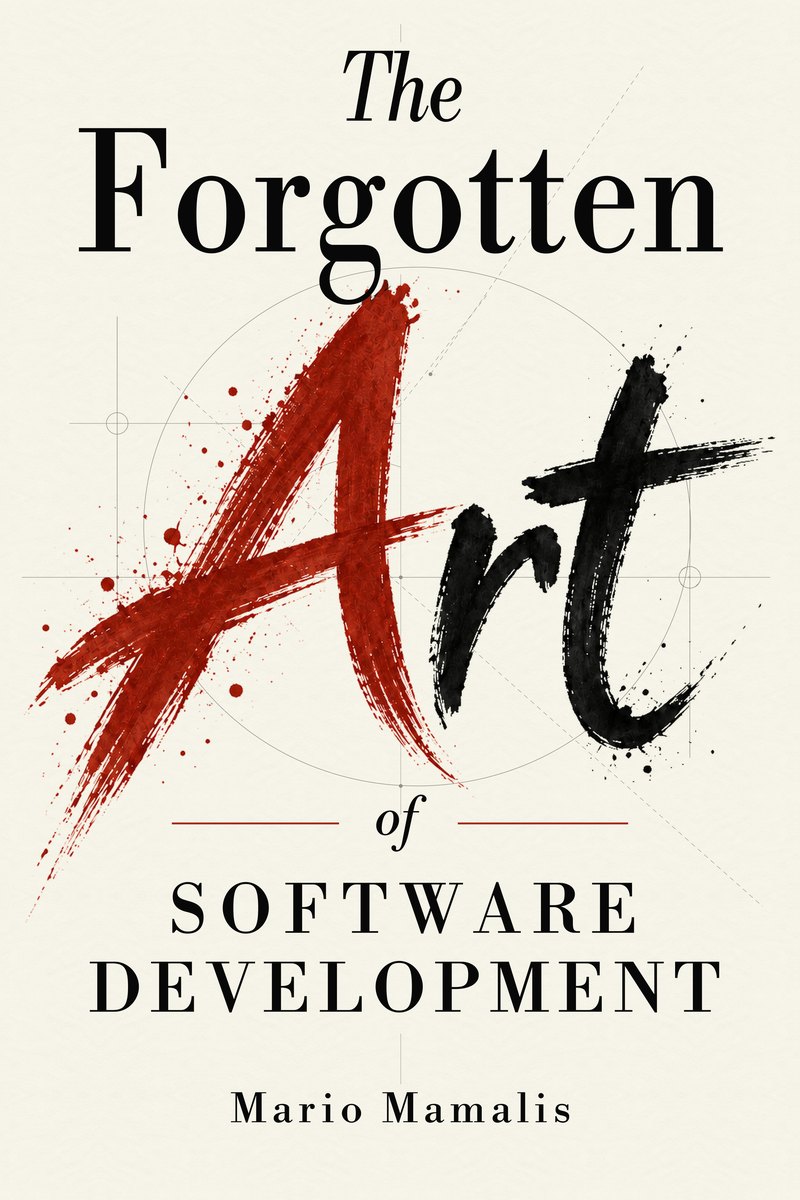
The Book
As code becomes easier to produce, why is successful software still so difficult to build?
I wrote this book for developers, architects, and engineering leaders who have watched a team deliver exactly what was requested and still miss the problem. Drawing on my own experience, I explore how teams make those decisions, what it takes to build software someone else can understand and change, and why engineering judgment matters even more when AI can write the code.
From the Prologue
“Underneath all of it is something our industry talks about far less than it talks about tools, technologies, methodologies, and transformation: judgment. Judgment takes time. It comes from building things, breaking things, fixing things, making mistakes, watching others make mistakes, and discovering that many of the supposedly new problems in technology are old problems wearing newer clothes.
After a few decades, you recognize some of them when they walk through the door. And every once in a while, while everyone else is still discussing how something is going to begin, you find yourself thinking: I already know how this will end.”
My mentor Jon introduced me to Larry Wall’s three programmer virtues: laziness, impatience, and hubris. When I shared them with junior developers, they sounded like the opening findings in a bad performance review. Years later, I still come back to the questions behind them.
“The three virtues Jon taught me offer a better test. Does the developer remove unnecessary work rather than automate confusion? Do they shorten feedback without sacrificing care? Do they take enough pride in the result to make it understandable to the people who inherit it? Can they learn a new tool without turning the tool into an identity? Can they work broadly while respecting the depth they do not possess?”
“Refactoring should produce a concrete improvement: clearer intent, less duplication, a shorter path, a restored responsibility, or an unnecessary component that can now be removed. The practical question is whether the next legitimate change became easier to understand.
That discipline cannot survive as something developers do only when spare time appears. Organizations have to make room for that work because a new feature is visible and a simplification usually is not. Nobody outside the team may celebrate the duplicate rule that disappeared or the obsolete abstraction that was deleted. The value arrives later, when the next developer can make a change without first becoming an archaeologist.”
From Chapter 16
“I began this book with the words, ‘I already knew how it would end.’ I want far fewer reasons to say them when the next large initiative begins. The change starts when the engineer who recognizes a dangerous assumption has the means to test it, the confidence to challenge it, and the trust of people prepared to change direction. Experience then does more than predict what will go wrong. It helps the team choose what happens next.”
Duration:
Duration: